Why Reggio Emilia?

5 August 2010

I trace my knowledge of early-childhood education to a set of cereal boxes: attention-grabbing illustrations from a February 2008 article on selecting a preschool.

Pre-cereal box, I’d heard of Reggio Emilia from several friends in my parenting community delighted with their children’s Reggio-based “play school,” but Waldorf and Montessori were new to me. In my research since, I’ve discovered some appealing elements in Waldorf and Montessori, as well as some appalling ones. Undoubtedly I’ll adopt or adapt some Waldorf practices (especially the emphasis on seasons), but on the whole neither of the two styles is the right fit for our family.

Reggio, on the other hand, intrigues me more the more I read. I still don’t expect to adopt it in toto. I don’t agree, for example, that a child’s peers provide the proper social context for learning — more on that later. So as a starting place, what does appeal to me?

- project-based learning
- emergent curriculum (based on child’s interests)
- teacher as partner, nurturer, and guide
- documenting and displaying the child’s work to revisit and assess learning
- beauty, order, and possibility in the learning space

I’ll be exploring each of these aspects in detail, starting with this last one. Order in my surroundings is almost embarrassingly important to me. I am profoundly impacted by my space, and find that the clarity and depth of my thinking depends more than it should on having clear kitchen countertops. My current reading focuses on the learning space, and I’ve recorded many useful and brilliant ideas from Designs for Living and Learning.

More on that next time.

***
After thoughtful consideration prompted by an article on “slow reading,” I’ve decided to remove the distraction of links within the body of my posts.

Links:
cereal box illustrations
Wondertime article, “Shopping for a Preschool?”
API Seattle, my parenting community
“The art of slow reading”
“Reggio Emilia Approach”

Open Book homeschool theory series
Homeschool Theory: Resources

recommended homeschooling article

4 August 2010

For a provocative and well-reasoned article about socialization, attachment, and education, take a look at this: “Are Children ‘missing out’ by going to School?”

Look for more recommended reads in the sidebar —>

towards a theory of homeschooling

25 July 2010

I’m deciding how to homeschool my 5-year-old daughter. We’ve spent the last year unschooling, more or less. A year of experience and insight has taught me that a more structured approach will better suit our family.

Among the approaches that attract me is project-based learning, so it seems appropriate that I’m undertaking to learn about pedagogical theory and practice as a project. Following is the initial plan I’ve drafted for the project. Future posts will address my progress.

Objective:   
articulate my own cohesive approach to homeschooling        

    Process: 

  • research education styles (start w/ current interests e.g. Foxfire, Reggio)
  • research education practices (e.g. Project Approach)
  • trace styles and practices to theories
  • research theories
  • research curriculum
  • analyze meaningful elements
  • synthesize to create my own principles

Product:
guiding principles document

Resources:
I’ve created a separate page listing the resources to explore for this project, which I’ll keep updated: Homeschool Theory: Resources 

online reading recommendations

18 May 2009

Here’s a selection of my regular online reads:

for brief bookish insights: 52Books
for tidbits from the world of the literati: Arts & Letters Daily
for book publishing news: EarlyWord
for food and farm politics (and my writing, every once in awhile): The Ethicurean
for detailed information about what’s happening in my neighborhood: EveryBlock
for conversations about the business of books: Follow the Reader
for witty observations on family and life: Mimi Smartypants
for author musings: Neil Gaiman’s Journal
for Tim Egan’s thoughts on life in the West: Outposts
for consistent hilarity: Overheard in New York
for irreverent politics (with a special place in my heart for ObamaNerd): Publicola
for well curated book-related news: Readerville
for clever juxtapositions: Slaughterhouse 90210
for laugh out loud, offensive restaurant reviews: Surly Gourmand

children’s books and storytelling

17 May 2009

I’ve cheated by back-dating this final Children’s Book Week post to keep it in series.

Children's Book Week

“Once upon a time there was a little brown mouse.”

“No, wait! I want the mouse to be blue.”

“Well then, this mouse was blue, except for her tail, which was black. Her coloring was an advantage for the mouse, because she lived in the library, and she could blend in among the books. She would press her body against the spine of a blue book, and shape her tail into script, so it looked like the book’s title. . .”

I have very little skill as a storyteller, despite a lot of practice. My daughter requests stories every day, and the story of the mouse, which we haven’t finished, is our latest endeavor — “our” because it’s most certainly a collaboration. In addition to insisting that this story’s mouse be blue, Meg asked whether the mouse had any parents, and why she didn’t live with them, and if she saw them often, and why she lived in the children’s section. I begin with characters and then try to discover where they’ll take us. Meg’s prompts help form the characters or shape the plot.
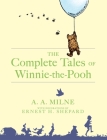
There are at least two children’s books famous for their origins as tales told to particular children, and both begin with a request. Just after Edward Bear bump, bump, bumps down the stairs to be introduced as Winnie-the-Pooh, Christopher Robin asks for a story for the bear “About himself. Because he’s that sort of Bear.”

Alice and her sisters also “beg a tale”:
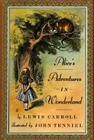
Imperious Prima flashes forth
Her edict to “begin it”:
In gentler tone Secunda hopes
“There will be nonsense in it.”
While Tertia interrupts the tale
Not more than once a minute.

“Tertia”/Edith’s interruptions give way to “sudden silence” in the following line, just as Christopher Robin’s questions end after he asks whether the Christopher Robin in the story is himself. I understand the silencing of those voices on the page, as their inclusion in the tale would repeatedly take the reader out of it. But I can’t imagine that in the initial telling, the children would have merely listened.

One of the characteristics of oral tales — not to mention young children — is their interactive nature. There’s a fluidity to stories not present in books. Though a child might ask as many questions about a written tale as an oral one, she has fewer opportunities to shape a story that is already fixed in print.

A story’s interactivity means that it is usually personal to the child, involves play between the adult and child, and allows opportunities for the child to assert her power to direct the action. That’s a remarkable set of possibilities for one activity with my girl, and it probably explains how often I hear: “Tell me a story.”
Maurice Sendak and insight

16 May 2009
Children's Book Week

Is there a word for a feeling or insight so subtly and perfectly expressed that it touches you and moves you and becomes a touchstone for what a concept — one as large as “love” or “family” or “reconciliation” — truly means?

Where The Wild Things Are is like that. Max, after making mischief of one kind and another, is sent to his room without supper. He journeys to where the wild things are, becomes king and leads a wild rumpus, then feels lonely and wants to return to where someone loves him best of all. He gives up being king and sails back to his room, and there his supper waits for him, and it is still hot.

The movie, to be released in October, has a lot to accomplish in transferring and expanding Max’s evening of exuberance, conflict, fantasy, and forgiveness. Based on the trailer, I’m hopeful.

Bonus: Did you see President Obama reading Where the Wild Things Are in April?

best friends in children’s books

15 May 2009
Children's Book Week

My declaration yesterday that Mo Willems’ Gerald and Piggie are kid lit’s best-written friends since Frog and Toad was rash. While I do love the duo, had I considered more carefully, I would have qualified that statement: they are one of the best pairs.

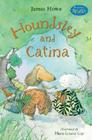
How could I have forgotten Houndsley and Catina? Like Gerald and Piggie (and Frog and Toad), their distinctive personalities and voices complement each other. Houndsley seems more introverted and mellow, Catina more extroverted and anxious. While G&P make me laugh, Houndsley and Catina charm and soothe me. Each is careful with the other’s feelings, and though the stories aren’t preachy, together the pair discovers more in each interaction about how to be a good friend.

There are four tales so far in the Houndsley and Catina series, each surprisingly nuanced and poetic for early reader/chapter books, and they present an established, comfortable friendship.

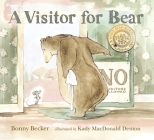
Other favorite friends are Bear and Mouse from A Visitor for Bear. The language here is also part of the appeal, though in this case it’s an expansive vocabulary: “This is impossible! Intolerable! Insufferable!” says Bear, about the persistent Mouse’s efforts to gain his attention. Here, we have a friendship at its sputtering start, and I’m glad to learn that there are more Bear and Mouse books planned. I want to see how they settle into their relationship.

Who are your favorite friends in children’s literature?

Related post:
popular children’s books I hate

popular children’s books I hate

14 May 2009
Children's Book Week

The winners of the 2009 Children’s Choice Book Awards, announced this week, include The Pigeon Wants a Puppy, by Mo Willems, as the Kindergarten to Second Grade Book of the Year. While I’m charmed by the simplicity of Mo Willems’ drawings, and I think his Elephant and Piggie are the best pair of friends in kid lit since Frog and Toad, I don’t like the pleading pigeon. I understand the role reversal. I understand the delight some children experience in saying, rather than hearing, “no, no, no.” I get it. I just don’t enjoy it.

Another popular children’s book that gets on my nerves is The Tale of Despereaux. I was along for the ride through most of the first few chapters, though I bristled every time DiCamillo addressed me as “Reader” — only Charlotte Brontë gets to call me “Reader” (N.B. This is in no small part why I stopped reading the often lovely Gluten-Free Girl blog). DiCamillo lost me when she asked if I knew the definition of “perfidy,” and admonished me to look up the word in my dictionary just to be sure. I can’t abide a finger-wagging narrator. I kept reading, since I was sharing the story with my girl, despite the tone and the inelegant perspective shifts, but I didn’t get through the whole tale. I adopted a “don’t offer, don’t refuse” policy at storytime, and my daughter lost interest in the story — something she hasn’t done with any other bedtime book.

And I may be banished from the nerddom for telling, but I don’t enjoy The Phantom Tollbooth, either. It’s entirely too clever and at some point the wordplay becomes simply tiresome. Again, I get it. I just don’t like it.

And you? What well-regarded kid’s books would you like never to read again?

Neil Gaiman and comics

13 May 2009
Children's Book Week

Sandman and a fifth of Jack are the only good things I ever picked up from a boy’s dorm room floor. That was 15 years ago, and I haven’t discovered a comic book that’s grabbed me since.

Now I’m in the position of trying to find intelligent comic books that work for a young child and aren’t utterly boring to a grown literature lover. It’s the early childhood version of seeking out Sandman.

Serendipity isn’t serving me now as it did then, despite the tractor beam that draws any comic in the vicinity into Meg’s grasp. Most of her finds are adult-oriented. Though she has adopted her mom’s Death and Delirium dolls (imagine: muppet-baby-style wide-eyed goth-chick Death and pretty punk Delirium in a 4-year-old’s sling — that’s cognitive dissonance right there), she hasn’t found the Sandman series yet. She has discovered all of her dad’s comic strip collections, though, and they’re only moderately more age appropriate. His tastes run toward clever 80s-90s favorites like The Far Side, Dilbert, Bloom County, and Calvin and Hobbes. One thing those strips have in common is wit, and that’s exactly the reason I can’t bear to read them to the girl. It’s hard enough to encourage her learn the medium by matching the written with the drawn elements of the story. Add to that the need to explain every joke, and it’s a bit of slog.

I discussed the situation with my friend Bill, who draws the library- and book-focused Unshelved strip, and he thought Meg might just be too young, but suggested Owly (here’s the Unshelved Book Club’s presentation of Owly). Given her driving interest, which I can’t imagine is unique in the realm of little kids, I’d like to identify additional candidates.

What comic books or comic strips do you think might entertain a 4-year-old and her possibly overly picky mom?

Rudyard Kipling and audio books

12 May 2009
Children's Book Week

Audio books make for pleasant car rides, especially with my girl. Though I’d never listen to hours of Raffi on a road trip (or any other setting, truth be told), I’ll gladly revisit favorite books from my childhood read by talented performers.

A good audio book does require a good narrator. We’ve discovered some gems, like Stephen Fry’s renditions of A Bear Called Paddington and More About Paddington, and Mary Beth Hurt’s reading of The Fledgling. We’ve also borne some disappointments, like Eric Idle narrating Charlie and the Chocolate Factory.

I like Idle well enough, but Meg wasn’t impressed. “When are they going to start talking?!” she wanted to know, and we finally understood her to mean, “When is the narrator going to adopt the voices of the characters?” I’m glad she’s not so demanding of her parents — she’s since contentedly listened to her dad read Charlie and the Chocolate Factory without ever expressing disappointment that the characters weren’t talking — but she wants her audio books performed.

I’ve found that I share her sensibilities. I feel more engaged in the story when the narrator voices the characters, subtle though it may be. This has been harder to find than I expected, so I was delighted to discover a story I remember diving into as a child with a delightful narrator who successfully (for the most part) manages several characters in two accents. Though the author was English, I think the story, set in India, benefits from a narrator presenting an accurate Indian voice.

Meg was enchanted. We listened to the story on our way across town, and when it ended on the way back, she asked to start it over. She then had her first experience of something all audio book listeners will recognize: sitting in the car outside our house to hear the story through (once again) to the end.

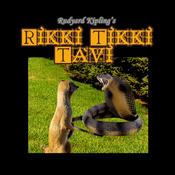
I’ll send you now to get your own free download of Rikki Tikki Tavi read by Sumeet Bharati from Audible.com. In return, will you tell me your favorite audio books in the comments?

Related post:
E.B. White and the spiral